Social Media, Consulting

•

9 min

Shitstorm Management: Why a Shitstorm Can Be Your Best Post of the Year

Shitstorm Management: Why a Shitstorm Can Be Your Best Post of the Year

Shitstorm Management: Why a Shitstorm Can Be Your Best Post of the Year

Delete, stay silent, hope? Then you’ve already lost. Here’s how to turn a comment-section disaster into reach, followers and respect.

Delete, stay silent, hope? Then you’ve already lost. Here’s how to turn a comment-section disaster into reach, followers and respect.

Olivia Ulbing-Sommeregger

by Olivia Ulbing-Sommeregger

[object Object]

In a nutshell

  • A shitstorm is an accumulation of critical comments against a brand, not a single hater.

  • Triggers are unethical behaviour, quality problems and communication mistakes. Amplifiers are influencers, unfairness and wrong reactions.

  • Deleting and silence make things worse, factual replies and a clear stance defuse them.

  • Positive comments to the front, hate out, admit mistakes, speak with one voice.

  • First sign of life within 60 minutes, statement within 3 to 6 hours, usually blown over after 2 to 3 days.
200,000+

200,000+

200,000+

views on the managed client video

views on the managed client video

1,300

1,300

1,300

new followers from the shitstorm

new followers from the shitstorm

29

29

29

shitstorm cases analysed (Rauschnabel et al.)

shitstorm cases analysed (Rauschnabel et al.)

~20%

~20%

~20%

more spread per moral-emotional word (US Twitter study, PNAS 2017)

more spread per moral-emotional word (US Twitter study, PNAS 2017)

Shitstorm management sounds like a big-corporation problem, until your post has 400 comments at 9:12 am and management calls at 9:40 am. Outrage is the hardest currency on social media in 2026, because according to Mimikama (April 2026) algorithms don’t judge whether something is fair, only whether it gets attention. In plain English, if you only write your shitstorm script when it’s already happening, you’re writing it too late. We manage shitstorms for clients. And yes, one of them brought a brand 1,300 new followers.

What is a shitstorm – and how does it start?

According to Christian Salzborn’s dissertation (University of Hohenheim, 2015), a shitstorm is an accumulation of critical, sometimes gloating comments on social media aimed at a company. Back in 2011 the word was named Anglicism of the Year in Germany, so it’s been lived reality for 15 years. One snippy comment still doesn’t make a shitstorm. Nor do ten.

Researchers from the University of Michigan, the University of Bamberg and the Otto Beisheim School of Management analysed 29 case studies on this. In plain English, individual criticism doesn’t set anything off yet. Things tip when several triggers come together and amplifiers pile on.

The three classic triggers are unethical behaviour (discriminatory or politically dicey campaigns, including slip-ups by staff), quality problems and communication mistakes such as deleted criticism or late, tone-deaf replies. It turns into a wildfire through influencers, NGOs, a sense of unfairness and the wrong reaction from the brand. Since 2012 the Swiss Schwede-Graf scale has measured how fierce it gets in wind strengths, from dead calm to hurricane.

Why does a shitstorm get so big so fast?

Because platforms don’t ask whether something is fair, only whether people react to it. According to Mimikama, outrage follows a set pattern of escalation, a clear culprit, simplification and mass sharing. Emotional content gets more of a stage, nuanced content doesn’t.

Research adds a bitter number to this. In a study by NYU and Princeton (PNAS, 2017) using US Twitter data, each additional moral-emotional word increased the spread of a message by around 20%. US data, sure. The mechanism is still the same on Instagram, LinkedIn and TikTok. Anger is reach.

Then there’s the mistake brands keep making. They go quiet or delete, and that’s exactly what the Michigan-Bamberg study names as an accelerant. In a Bitkom survey of 172 IT companies in Germany, 54% didn’t consider a shitstorm a serious threat to their reputation, only 42% had a crisis plan and only 37% had fixed response times. The survey is older and covers one industry, but it shows the basic problem. Crises get underestimated until they’re there.

“The shitstorm doesn’t damage your brand. How you handle it does.”
— Olivia Ulbing-Sommeregger, Founder oha! digital

Is every shitstorm bad for the brand?

No. The researchers note that financial damage can’t be proven with data so far and that there can even be positive effects, for example when previously unknown companies become known through the storm (Rauschnabel et al.).

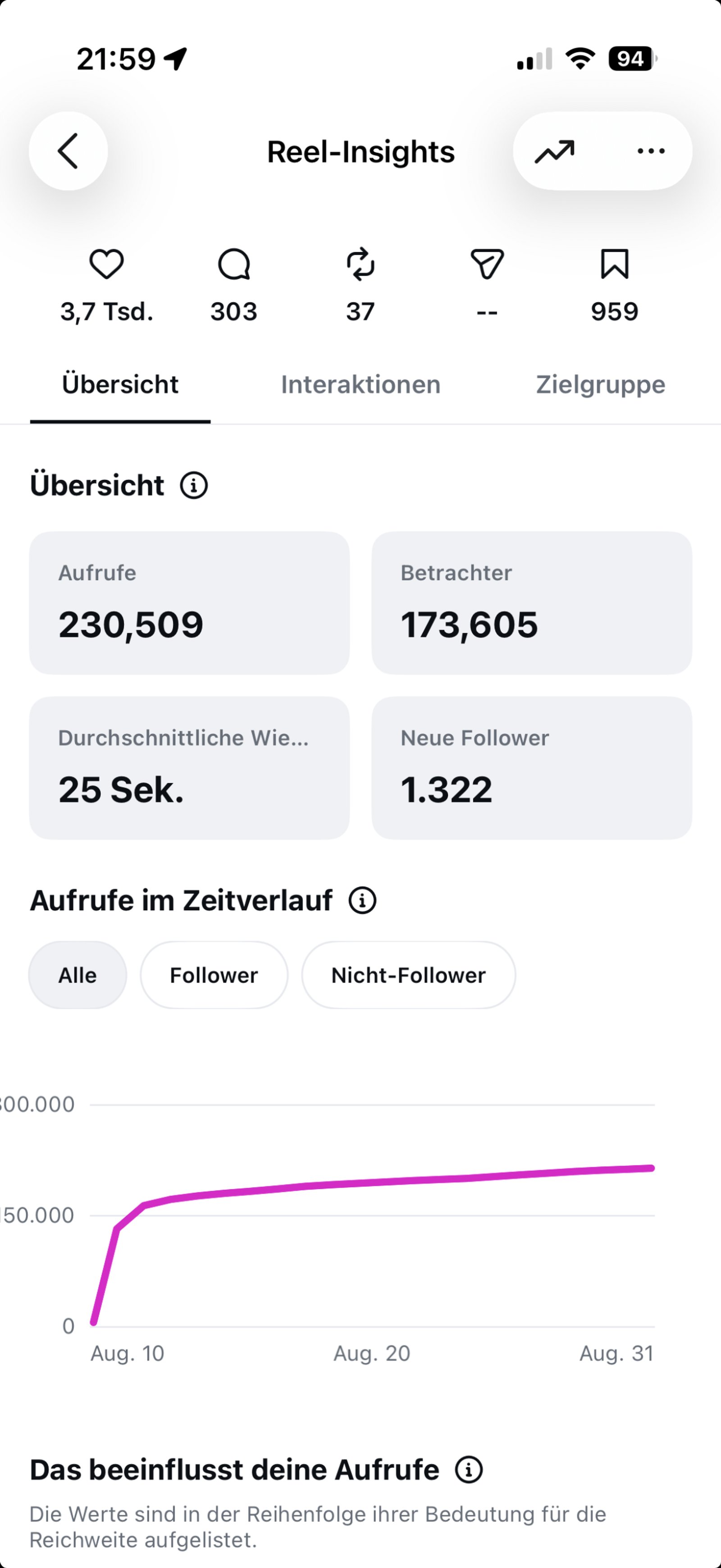
We’ve seen this live. Under a video from a client brand (the name stays between us), a shitstorm broke out. We didn’t delete, we sorted. Supporters to the front, hate out, factual answers, a clear stance. In the end the video had over 200,000 views and 1,300 new followers.

screenshot from Instagram insights of a video that triggered a shitstorm

The catch is that attention isn’t automatically trust. A well-managed shitstorm works when the brand stands by its position or openly admits mistakes. If you’ve really messed up and still celebrate the reach, you’re collecting spectators, not fans. Check after four weeks whether the new followers are still interacting with you before you declare victory.

Shitstorm management: what to do, what not to do?

Remember one sentence. You’re not managing the anger, you’re managing the stage. You decide to a good extent who gets seen. That’s community management in an emergency and a fixed part of our social media management.

✓ Do’s

  • Bring positive comments to the front
    There are almost always people who have your back. Like them, reply to them and ideally have the author of the post and colleagues like them too, so they rise to the top.

  • Hide or report hate and incitement
    Insults, racism and anything below the belt have no place on your stage. Screenshot first, then hide, report and use the platform’s word filters.

  • Take a stand and admit mistakes
    Clear, short, no empty phrases. If there was a mistake, name it and say what’s changing.

  • Take factual criticism seriously
    Reply individually and personally and offer dialogue. According to the study, soothing replies and personal communication work.

  • Speak with one voice
    One person decides. Everyone else on the team stays out of the comments, including privately.

  • Pause scheduled posts
    A sale post in the middle of a shitstorm is a gift to the comment section.

✕ Don’ts

  • Deleting criticism
    Censorship is a classic amplifier. Delete only hate, threats and spam.

  • Staying silent and hoping
    If you say nothing, you leave the story to others. Your first reaction should be up fast.

  • Copy-paste replies
    The same canned reply under 50 comments is oil on the fire.

  • Sarcasm and self-justification
    We love irony, but not in a shitstorm. “You’ve misunderstood us” is the classic that never works.

  • Feeding the trolls
    Anyone who only wants to provoke gets no discussion, they get hidden or reported.

The first 24 hours: what to do in a shitstorm and when is it over?

This is our roadmap. It comes from practice, not from a study, and needs adapting to your brand’s size, industry and severity. Print it out before you need it.

0–30 min

Stop and assess

Pause scheduled posts and ads. Activate the crisis team, which means one decision-maker, one community manager and one person for sign-off. Save screenshots. Work out whether it’s justified criticism, a misunderstanding or a troll wave. Don’t post anything yet.

30–60 min

First sign of life

A short holding statement as a reply or pinned comment, along the lines of “seen, we’re looking into it, update by [time]”. Hide or report hate, like positive comments.

1–3 hrs

Clarify the facts

Check the facts internally and bring in management and, if needed, legal. Draft a statement. If there was a mistake, it gets named. Answer factual questions individually.

3–6 hrs

Take a stand

Publish the statement, ideally with a face (a video or story from management). Inform staff, clients and, if needed, the press. Brief the team, with no private self-justification.

6–24 hrs

Stay on it

Monitor every two hours, track sentiment and reach, keep replying individually. Name the announced measures and put dates on them.

24–72 hrs

Let it cool down

Implement the measures and report on them. Thank your supporters. Carefully restart normal content, with no tone-deaf promo posts.

Days 3–7

Post-mortem

What was the trigger, what worked, what didn’t? Update your crisis manual, roles and text modules.

When has a shitstorm blown over?

Our rule of thumb is that it’s over when four things are true at once. Comments and mentions have been well below the peak for 24 hours. No new media or influencers are picking it up. Accusations have turned into factual questions. And the post’s reach curve is flat. That’s usually the case after two to three days, and if media coverage continues, it takes longer.

SME or corporation: where does it snag?

SMEs are often short of people. Two staff, one weekend, one holiday, and nobody’s reachable. Sort out cover, phone numbers and sign-off by messenger in advance. At large companies, approval loops eat up the decisive hours. A legal fast lane and pre-agreed text modules win them back.

Let’s talk

Shitstorm emergency plan before things catch fire?

We’ll build the roles, text modules and roadmap with you. And we’ll have your back when it counts.

We’ll build the roles, text modules and roadmap with you. And we’ll have your back when it counts.

Get in touch

→

FAQ

Frequently asked questions about shitstorm management

What is a shitstorm on social media?

A shitstorm is an accumulation of critical, sometimes gloating comments on social media aimed at a company (definition after Salzborn, University of Hohenheim, 2015). A single negative comment isn’t a shitstorm.

How does a shitstorm start?

According to a study by researchers from the University of Michigan, the University of Bamberg and the Otto Beisheim School of Management, it starts when triggers such as unethical behaviour, quality problems or communication mistakes come together and get fuelled by amplifiers such as influencers, NGOs, perceived unfairness or wrong brand reactions.

Should I delete negative comments?

No. Deleting criticism counts as a communication mistake and can make a shitstorm worse. You should hide or report hate, racism, threats and spam, ideally after taking a screenshot as evidence.

How quickly do I have to react in a shitstorm?

As a guideline from oha! digital’s agency practice, the first sign of life should be up within 60 minutes and a full statement should follow within 3 to 6 hours. An older Bitkom survey of 172 IT companies showed that only 37% had fixed response times.

Can a shitstorm also be positive?

Yes. Research considers positive effects possible, such as greater awareness. In a shitstorm managed by oha! digital, a client video achieved over 200,000 views and 1,300 new followers. The precondition is that the brand reacts factually and stands by its position or admits mistakes.

How long does a shitstorm last?

There’s no universal duration. In oha! digital’s experience, most shitstorms die down after two to three days if no media or new triggers pile on.

Olivia Ulbing-Sommeregger

Written by

Olivia Ulbing-Sommeregger

Olivia Ulbing-Sommeregger

Founder & CEO, oha! digital

Olivia Ulbing-Sommeregger is founder and CEO of oha! digital, an agency for social media, performance marketing and AI based in Salzburg. Since 2018 she has been supporting companies across Austria, Germany and Switzerland – from SMEs to brands like Bankhaus Spängler and Miele Professional – with strategy, content and advertising on Meta, TikTok, LinkedIn and Google. She is co-author of the Rheinwerk book “Follow me! Erfolgreiches Social Media Marketing” (7th edition, 2025) and completed the WIFI diploma programme in CSR, ESG and sustainability management. Her standard is straight talk instead of agency blah.

← All Klartext articles

Keep reading

More Klartext

All articles →

AI, Social Media

•

Meta Muse Österreich: Der KI-Agent, den (noch) keiner hat – aber jeder kennen sollte

Meta Muse erledigt Marketing-Aufgaben im Hintergrund, nur nicht bei uns. Wir ordnen ein, was belegt ist, was offen bleibt und was du heute schon vorbereiten kannst.

Meta Muse erledigt Marketing-Aufgaben im Hintergrund, nur nicht bei uns. Wir ordnen ein, was belegt ist, was offen bleibt und was du heute schon vorbereiten kannst.

→

oha! digital team members talking about the new Instagram update

Social Media, Content

•

Instagram Features: Mosseri Was Against Long Video – Now 90 Minutes Are Coming

With “Features”, Instagram is announcing videos of up to 90 minutes, and Adam Mosseri was against the idea for a long time. We sort out what’s known and what brands in Austria should test now.

With “Features”, Instagram is announcing videos of up to 90 minutes, and Adam Mosseri was against the idea for a long time. We sort out what’s known and what brands in Austria should test now.

→

Woman with glasses checking a website on her laptop, stock image for the PHP2Shell security flaw

Web Design & Development

•

PHP2Shell: Your WordPress Has a Problem No Plugin Update Can Fix

PHP2Shell shows how vulnerable even well-kept WordPress sites are. We explain what happened, which systems will carry you through the next five years and how to move to Framer without a redesign.

PHP2Shell shows how vulnerable even well-kept WordPress sites are. We explain what happened, which systems will carry you through the next five years and how to move to Framer without a redesign.

→

Ready when you are!

Let’s make your
digital story work.

Tell us briefly what you’re planning.
The first call is on us.