Social Media, Consulting
•
9 min.

by Olivia Ulbing-Sommeregger
![[object Object]](https://framerusercontent.com/images/EyJfvc8skaW7YbkRDTghvEyZO1I.jpg?width=1600&height=1067)
Short & sweet
A shitstorm is an accumulation of critical comments directed at a brand, not an individual hater.
Triggers include unethical behaviour, quality issues, and communication errors. Amplifiers include influencers, unfairness, and inappropriate responses.
Deleting and staying silent worsen the situation; factual answers and a clear stance defuse it.
Bring positive comments forward, remove hate, admit mistakes, speak with one voice.
First sign of life within 60 minutes, official statement within 3 to 6 hours, usually weathered after 2 to 3 days.
Shitstorm management sounds like a corporate-only problem—until your post has 400 comments by 9:12 AM and executive management is on the phone by 9:40 AM. In 2026, outrage is the hardest currency on social media, because according to Mimikama (April 2026), algorithms don’t evaluate whether something is fair, but whether it generates attention. In plain English: if you only write your crisis playbook once an emergency hits, you're writing it too late. We manage shitstorms for our clients. Yes, one of them even brought a brand 1,300 new followers.
What is a shitstorm – and how does it start?
According to the doctoral thesis by Christian Salzborn (University of Hohenheim, 2015), a shitstorm is an accumulation of critical, partly malicious comments on social media directed against a company. The word was already chosen as Anglicism of the Year back in 2011, making it a lived reality for 15 years now. Still, a single snotty comment doesn't make one. Nor do ten.
Researchers from the University of Michigan, the University of Bamberg, and the Otto Beisheim School of Management analysed 29 case studies on the subject. In plain terms: isolated criticism doesn't trigger anything yet. Things tip when several triggers collide and amplifiers add fuel to the fire.
The three classic triggers are unethical behaviour (discriminatory or politically sensitive campaigns, including missteps by employees), quality issues, and communication blunders like deleted criticism or delayed, tone-deaf replies. It turns into a wildfire through influencers, NGOs, a perceived sense of unfairness, and the brand’s wrong reaction. How severe it gets has been measured by the Swiss Schwede-Graf scale since 2012 in wind forces—from dead calm to hurricane.
Why does a shitstorm escalate so quickly?
Because platforms don’t ask if something is just, but whether people react to it. According to Mimikama, outrage follows a fixed pattern of escalation, a clear culprit, oversimplification, and viral sharing. Emotional content gets the spotlight; nuanced content does not.
Research provides a sobering figure on this. In a study by NYU and Princeton (PNAS, 2017) using US Twitter data, each additional moral-emotional word increased the diffusion of a message by around 20 per cent. US data, sure. Yet the mechanism is identical on Instagram, LinkedIn, and TikTok: outrage equals reach.
On top of that comes the mistake brands make time and again. They stay silent or delete comments—the very thing the Michigan-Bamberg study identifies as an accelerant. According to a Bitkom survey among 172 IT companies in Germany, 54 per cent did not consider a shitstorm a serious threat to their reputation, only 42 per cent had a crisis plan, and just 37 per cent had set response times. The survey is older and covers a single sector, but it highlights the core issue: crises are underestimated until they happen.
“It's not the shitstorm that damages your brand. How you handle it does.”
— Olivia Ulbing-Sommeregger, Founder of oha! digital
Is every shitstorm bad for the brand?
No. The researchers note that financial damage cannot yet be proven with data and that there can even be positive effects, such as when previously unknown companies gain exposure through the storm (Rauschnabel et al.).
We have experienced this firsthand. A shitstorm erupted under a video of a client brand (we'll keep the name between us). We didn't delete; we triaged. Put supporters front and centre, weeded out hate, responded objectively, and took a stand. The result: over 200,000 views on the video and 1,300 new followers.
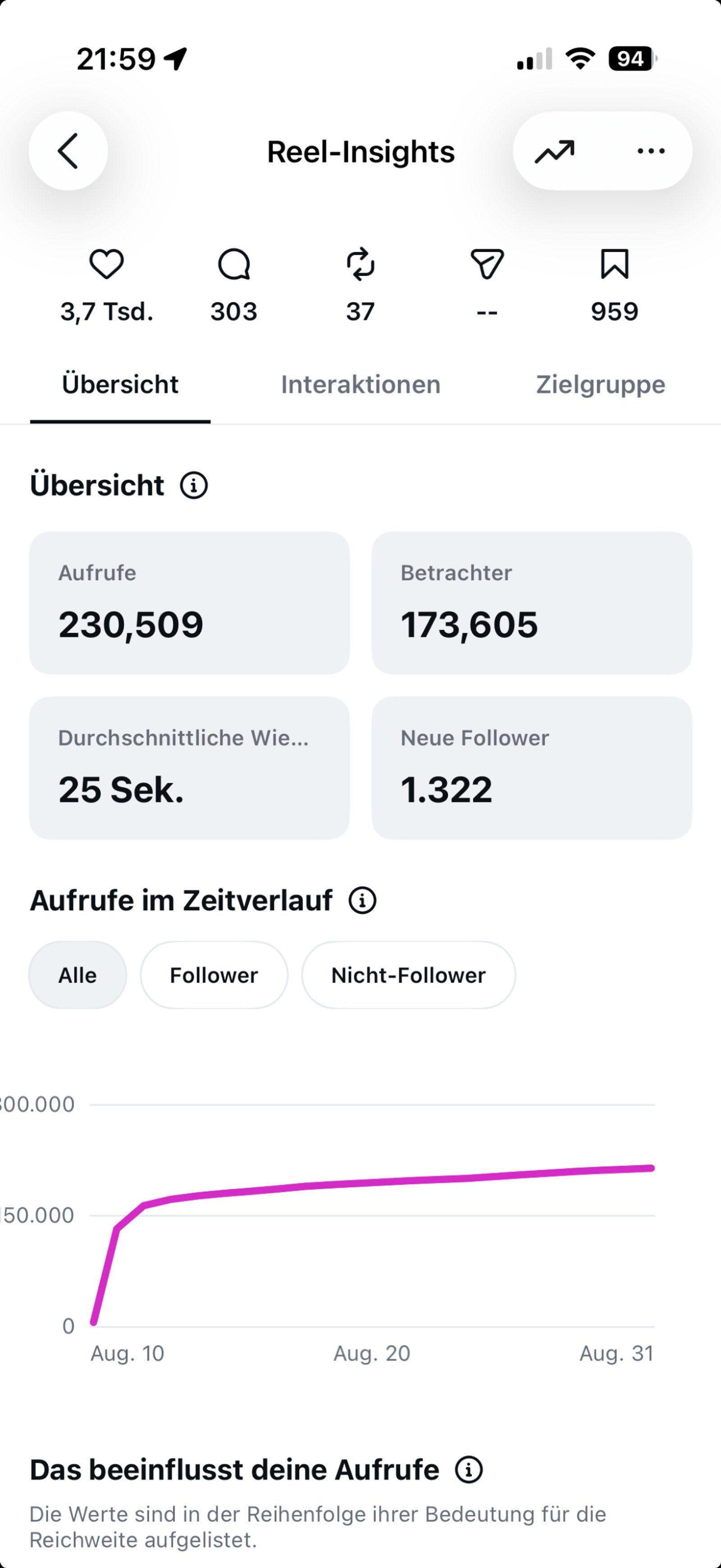
The catch: attention does not automatically mean trust. A well-managed shitstorm works when the brand stands by its values or openly admits mistakes. Anyone who genuinely messed up and still celebrates reach is gathering spectators, not fans. Check after four weeks whether the new followers are still engaging with you before declaring victory.
Shitstorm management: what to do, what to avoid?
Remember one sentence: You don’t manage the anger; you manage the stage. Who gets seen is largely up to you. That is community management in an emergency, and an integral part of our social media management.
✓ Do's
Bring positive comments to the forefront
There are almost always people who have your back. Like, reply, and ideally have them liked by the author of the post and by colleagues so that they move up to the top.Hide or report hate speech and incitement
Insults, racism, and anything below the belt have no place on your stage. First take a screenshot, then hide, report, and use the platform's word filters.Take a stance and admit mistakes
Clear, brief, without clichés. If there was a mistake, name it and state what is changing.Take constructive criticism seriously
Reply individually and personally, offer a dialogue. According to studies, soothing responses and personal communication are effective.Speak with one voice
One person decides. Everyone else on the team does not comment off their own bat, not even privately.Pause scheduled posts
A sale post in the middle of a shitstorm is a gift for the comment section.
✕ Don’ts
Deleting criticism
Censorship is a classic amplifier. Only delete in cases of hate, threats, and spam.Silence and hoping
Those who say nothing leave the narrative to others. The initial response should be ready quickly.Copy-paste replies
Posting the same boilerplate response under 50 comments is pouring fuel on the fire.Sarcasm and defensiveness
We love irony, but not in a shitstorm. “You misunderstood us there” is the classic line that never works.Feeding trolls
Anyone just looking to provoke gets no discussion, but rather hiding or reporting.
The first 24 hours: What to do during a shitstorm and when has it blown over?
This is our roadmap. It comes from hands-on experience, not a study, and needs to be adapted to the size, industry, and severity of your brand. Print it out before you need it.
0–30 mins
Stop and Assess
Pause scheduled posts and ads. Activate the crisis team: one decision-maker, one community manager, one approver. Take screenshots. Assess whether it is justified criticism, a misunderstanding, or a wave of trolls. Do not post anything yet.
30–60 mins
First Sign of Life
Short holding statement as a reply or pinned comment: acknowledged, we are looking into it, update by [time]. Hide or report hate speech, like positive comments.
1–3 hrs
Clarify the Facts
Check facts internally, involve management and, if necessary, legal counsel. Draft a statement. If a mistake was made, name it. Answer factual questions individually.
3–6 hrs
Take a Stand
Publish statement, ideally with a face (video or story from management). Inform employees, clients, and, if appropriate, the press. Brief the team: no private justifications.
6–24 hrs
Stay on It
Monitor every two hours, track sentiment and reach, continue to reply individually. Name announced measures and set dates for them.
24–72 hrs
Let It Cool Down
Implement measures and report on them. Thank supporters. Carefully resume regular content, without tone-deaf promotional posts.
Days 3–7
Post-Mortem
What was the trigger, what worked, what didn't? Update the crisis handbook, roles, and text templates.
When has a shitstorm blown over?
Our rule of thumb: It is over when four conditions are met at the same time. Comments and mentions have been well below the peak for 24 hours. No new media or influencer pick-ups are being added. Accusations have turned into factual questions. In addition, the post's reach curve has flattened out. This is usually the case after two to three days; if media coverage persists, it takes longer.
SMEs or corporations: Where are the sticking points?
SMEs often lack manpower. Two people, a weekend, a holiday, and nobody can be reached. Establish substitutes, telephone numbers and sign-off via messenger in advance. At large corporations, approval loops cost crucial hours. A legal fast lane and pre-approved text templates win them back.
Let's talk
Shitstorm contingency plan before things catch fire?
Enquire now
→
Frequently Asked Questions
Frequently Asked Questions about Shitstorm Management
What is a shitstorm on social media?
A shitstorm is an accumulation of critical, sometimes malicious comments on social media directed against a company (definition according to Salzborn, University of Hohenheim, 2015). A single negative comment is not a shitstorm.
How does a shitstorm arise?
According to a study by researchers from the University of Michigan, the University of Bamberg, and the Otto Beisheim School of Management, it occurs when triggers such as unethical behaviour, quality issues, or communication blunders coincide and are fuelled by amplifiers like influencers, NGOs, perceived unfairness, or inappropriate brand responses.
Should I delete negative comments?
No. Deleting criticism is considered a communication blunder and can aggravate a shitstorm. You should hide or report hate speech, racism, threats, and spam—ideally after taking a screenshot as evidence.
How quickly do I need to react during a shitstorm?
As a rule of thumb based on agency practice at oha! digital, an initial sign of life should be posted within 60 minutes, followed by a comprehensive statement within 3 to 6 hours. An older Bitkom survey of 172 IT companies revealed that only 37 percent had fixed response times.
Can a shitstorm also be positive?
Yes. Research suggests that positive effects are possible, such as increased awareness. During a shitstorm managed by oha! digital, a client's video achieved over 200,000 views and gained 1,300 new followers. The prerequisite is that the brand responds objectively, stands by its position, or admits mistakes.
How long does a shitstorm last?
There is no universally applicable duration. Based on experience at oha! digital, most shitstorms subside after two to three days, provided that the media or new triggers do not add further fuel to the fire.
Sources
Written by
Founder & CEO, oha! digital
Olivia Ulbing-Sommeregger is the founder and CEO of oha! digital, a Salzburg-based agency specialising in social media, performance marketing and AI. Since 2018, she has been supporting companies across the DACH region – from SMEs to renowned brands such as Bankhaus Spängler and Miele Professional – with strategy, content and advertising on Meta, TikTok, LinkedIn and Google. She is the co-author of the Rheinwerk specialist book "Follow me! Successful Social Media Marketing" (7th edition, 2025) and has completed the WIFI diploma course in CSR, ESG and Sustainability Management. Her standard: plain speaking instead of agency fluff.
← All plain-text posts
Read more
More plain speaking
All posts →

AI, social media
•
Meta Muse for Small Business: The AI agent taking over your marketing – just not in Austria
→

Web
•
Warranty labels in online shops: Mandatory since 27 Sept – what about your shop?
→

Social Media, Consulting
•
EmpCo Directive comes into force: What you won't be allowed to call "sustainable" from 27 September 2026
→
Ready when you are!
Let’s make your
digital story work.
Briefly tell us what you have in mind.
The initial consultation is free of charge.
" height="139.48895313719183px" id="Fw0RCnuvL" transform="translate(0.712 0.347)" width="755.8148253984783px"/></svg>)
